

- Flooring
- |
- Rugs
Area Rugs and Stair Runners for Indianapolis Homes: A Design Guide for 2026
September 15, 2026
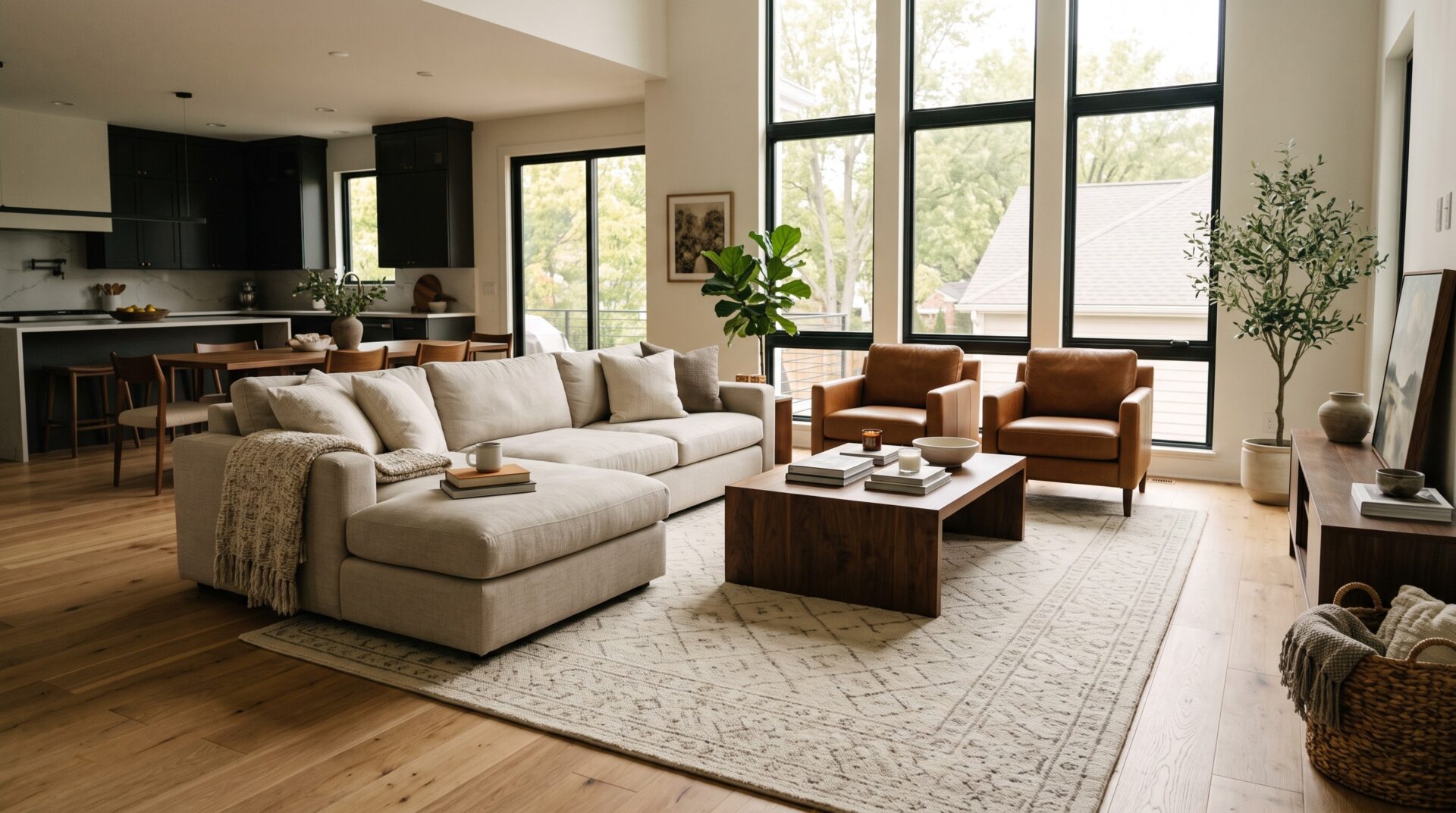
The floor renovation is done. The LVP runs cleanly from the entry through the kitchen. The engineered hardwood in the living room looks exactly right. And then you stand at the bottom of your staircase — bare oak treads, no runner — and realize the most visible vertical surface in your home looks like it was finished by someone who ran out of ideas halfway through.
Area rugs and stair runners for Indianapolis homes are where a flooring renovation gets completed, not just where it ends. They add warmth, sound control, texture contrast, and safety. In Indianapolis homes where open-concept living is the standard and staircases are often architectural focal points, a well-chosen rug or runner elevates the whole space.
ICC Floors Plus carries area rugs from Karastan, Fabrica, and Stanton. Book a free consultation or stop by the showroom at 7226 E 87th St to see them in person.
Why Rugs and Runners Matter in an Indianapolis Home
Here’s what most Indianapolis homeowners discover after a renovation is finished: hard surface floors solve one problem and create several others.
Sound dampening is the most common surprise. LVP, hardwood, and tile all transmit impact noise between floors — in a two-story home, footsteps from the second floor are clearly audible below. A quality area rug with a thick pad reduces this significantly. In new builds in Carmel, Fishers, and Noblesville, acoustic control is one of the most frequent reasons homeowners seek rugs after move-in.
Safety on stairs is the most urgent reason. Bare hardwood and LVP stairs are slippery in socks and indoor footwear, standard in Indiana winters. A fitted stair runner adds grip to each tread. Stair runners must be secured with tack strips or gripper rods — a runner laid flat without securing is a safety hazard regardless of how well-sized it is.
Warmth and visual anchoring round out the list. An area rug over LVP or engineered hardwood returns the underfoot softness that bare floors remove. And in an open-concept home, a rug defines where the seating group is and where traffic flows — without it, furniture floats.
“The crew that remodeled our first floor was on time, efficient, cleaned up afterwards and were very polite.”
Indianapolis Homeowner — First Floor Remodel
Area Rugs: Sizing, Placement, and What Actually Works
The single most common area rug mistake Indianapolis homeowners make is buying a rug that’s too small. A rug that doesn’t fully anchor the furniture group it’s meant to define looks like an afterthought. Here are the rules that produce results.
Living rooms: The front legs of every sofa and chair should sit on the rug — at minimum the front two legs. The rug should extend at least 18-24 inches beyond the sofa on each side. In a typical Carmel or Fishers great room with a sectional, this usually means an 8×10 or 9×12 at minimum.
Dining rooms: The rug should be large enough that all chairs remain on the rug when pulled out to the seated position. Add 24-30 inches to each dimension of the dining table. For a 60-inch round table, a 9×12 rug is the starting point.
Bedrooms: The rug should extend at least 18-24 inches on the sides and foot of the bed. For a king bed, a 9×12 with two-thirds under the bed and one-third at the foot creates the right proportions.
“The sizing question is where most people go wrong,” says Taylor Dore, Retail Sales Manager at ICC Floors Plus. “We see 5×7 rugs in rooms that need 8×10 minimum. A correctly sized rug makes the room look bigger, not smaller. An undersized rug shrinks the space and makes the furniture look unanchored.”
Material selection for Indiana households
For living rooms and dining rooms: wool rugs from Karastan or Fabrica offer exceptional durability, natural soil resistance, and moisture-wicking properties that resist mildew better than synthetic fibers in Indiana’s humid summers. Wool holds its appearance over years of family use in a way that synthetics don’t fully replicate.
Be careful with viscose rugs (sometimes labeled as “art silk” or “rayon”). Viscose degrades when wet — it’s a poor choice for Indianapolis homes with pets, children, or any humidity risk. Genuine silk is more resilient, but for most Indianapolis households a power-loomed wool-blend or quality polypropylene rug is the more practical choice.
For pet households: flat-weave or low-pile wool rugs are the most practical. Deep pile shag rugs hold pet hair and show wear in traffic paths faster. Spot clean pet accidents immediately with a clean cloth and cold water; enzyme-based cleaner works well on wool for organic stains.
Stair Runners: Choosing One That Fits Indianapolis Architecture
The staircase in an Indianapolis new build is often the most architecturally prominent interior element in the home — the first thing visible from the entry, the anchor of the two-story open foyer that defines Hamilton County new construction. A bare staircase looks unfinished. A well-chosen runner completes the architectural intention.
ICC Floors Plus Pro Tip: For stair runners, evaluate at least three pattern options in your actual staircase lighting before committing. What looks right in a showroom under fluorescent light and what works in a specific stair orientation with afternoon southern exposure can be completely different decisions. The Shop at Home service brings samples directly to your home for exactly this reason. — ICC Floors Plus Flooring Team
Width, coverage, and lineal yardage
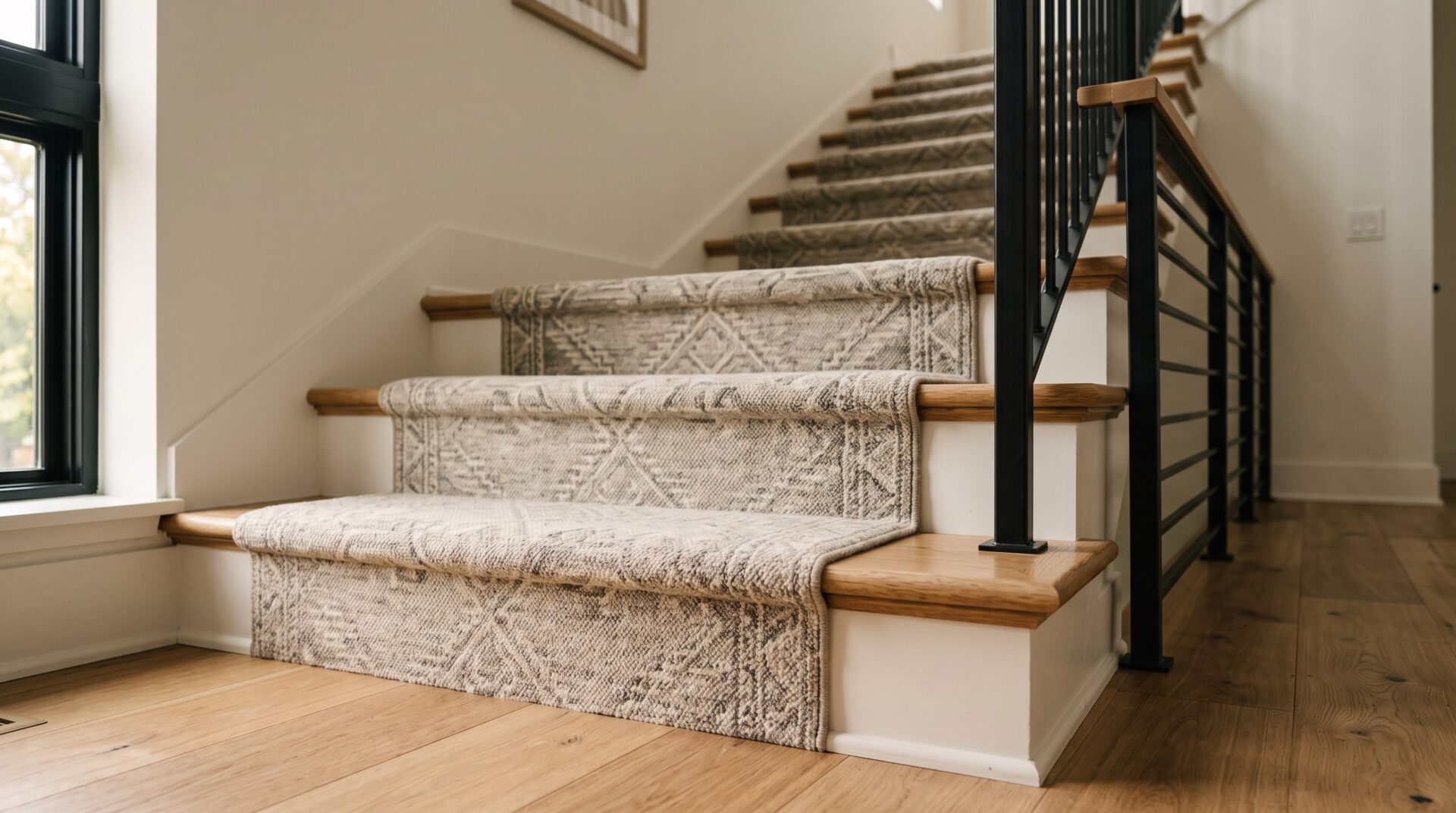
Stair runners are typically installed with 1-4 inches of exposed wood tread showing on each side. For Indianapolis homes with standard 42-inch wide stairs, a 27-31 inch wide runner leaves the right amount of tread exposure. Most Indianapolis two-story homes have 14-17 risers on the main staircase, requiring approximately 14-20 lineal yards of runner material depending on pile height and installation method. A professional measure is the only reliable way to know before purchasing.
Installation method
Waterfall installation folds the runner over each nosing. Hollywood (or cap-and-band) installation pulls the runner taut under the nosing and pins it at the riser, creating a tighter, more tailored look. In Indianapolis homes with bullnose or rounded nosing profiles, Hollywood installation requires specific fitting techniques to avoid gaps at the front edge of each tread. Professional installation is not optional — a stair runner is a safety surface.
Pattern selection for Indianapolis homes
Hamilton County new construction runs toward transitional architecture: clean lines, warm natural materials, restrained color palettes. Stair runners that work consistently here are geometric or abstract patterns in warm neutrals — greige, warm gray, ivory, soft brass. Traditional floral or medallion patterns work in older Indianapolis homes with period-appropriate architecture (Meridian Hills, Ravenswood), but tend to fight the transitional aesthetic of Carmel and Fishers new builds.
Stanton carries stair runner collections in exactly this range — geometric patterns in wool and wool-blend constructions that hold up to stair traffic while fitting the design aesthetic of Indianapolis’s mid-to-upper market homes.
“Most homeowners don’t start thinking about a stair runner until the rest of the project is done,” says Nate at ICC Floors Plus. “Then they realize the staircase is the most visible part of the room and they’ve been looking at bare treads for two years. Coming in with samples and landing on something that works with the floor and the paint and the trim — that’s one of the most satisfying problems we solve.”
“We decided to replace all carpeting in our home. We had a mixture of both carpet and LVP flooring. We called ICC in hopes of matching our current LVP. We were fortunate enough to have David Robertson as our sales representative. He was absolutely wonderful! So helpful and so very kind. He made the process so easy!”
L. Rabbit, Indianapolis Area — Carpet + LVP
Rug Pads: Non-Negotiable
Use a felt-top with natural rubber backing — this separates the rubber from the floor surface and provides cushion. Never use a PVC or vinyl-backed pad; these can damage hardwood finishes and void floor warranties. The same applies to LVP — rubber-backed rugs left directly on LVP for extended periods can cause discoloration. Replace natural rubber pads every 3-5 years as the rubber oxidizes over time. Never use sticky grip mats under large area rugs on hardwood or LVP — the adhesive bonds to the finish and damages the floor surface on removal.
ICC Floors Plus is a NARI Central Indiana member and has served Indianapolis homeowners since 1998. The showroom at 7226 E 87th St carries Karastan, Fabrica, and Stanton collections.
Frequently Asked Questions
What size area rug do I need for my Indianapolis living room?
For a typical Indianapolis living room seating group, the minimum is an 8×10 rug with the front legs of all seating on the rug. In a larger great room with a sectional, a 9×12 or 10×14 is usually needed. The rug should fully anchor the furniture group, not just sit under the coffee table.
How wide should a stair runner be for Indianapolis new construction stairs?
Most Indianapolis new construction stairs are 42-48 inches wide. A stair runner width of 27-31 inches leaves 4-7 inches of exposed tread on each side — the right finished look. Most Indianapolis two-story homes require approximately 14-20 lineal yards of runner material for the main staircase. Start with a professional measure before purchasing.
What material is best for a stair runner in an Indianapolis home?
Wool and wool-blend constructions from brands like Stanton are the best choice for stair runners. Wool is durable under the heavy, concentrated foot traffic of a staircase, naturally resilient to matting, and flame-resistant. Synthetic runners are more affordable and stain-resistant, but compress faster in high-traffic stairs and show wear more quickly than wool.
Can I put a rug on LVP or engineered hardwood flooring?
Yes, with the right rug pad. Use a felt-top with natural rubber backing — not a PVC or vinyl-backed pad, which can damage LVP finish or hardwood and void warranties. A quality pad prevents rug creep, protects the floor, and adds cushion.
Does ICC Floors Plus carry stair runners and can they install them?
Yes to both. ICC Floors Plus carries stair runner collections from Stanton and other premium brands, and can coordinate professional stair runner installation. The Shop at Home service brings samples directly to your Indianapolis home so you can evaluate patterns in your actual staircase lighting before committing.
Ready to Complete the Project?
The ICC Floors Plus showroom at 7226 E 87th St in Indianapolis carries Karastan, Fabrica, and Stanton collections that finish the job properly.
Book a free design consultation or call (317) 813-0931. Visit our area rugs page to browse current collections before you come in.
A bare staircase or undersized area rug is often the only thing standing between a good renovation and a great one. Let’s finish it.
- Area Rugs
- Carpet
- Custom Runners
- Hardwood
- Luxury Vinyl
You Might Also Like
-

- Flooring
August 17, 2026
Laminate Flooring in Indianapolis: Is It Right for Your Indiana Home in 2026?
-

- Flooring
August 10, 2026
How to Choose Flooring for a Full Home Renovation in Carmel or Fishers, Indiana
-
- Flooring
July 20, 2026
Waterproof Flooring Options for Indianapolis Homes: Basements, Kitchens, and Beyond