

- Flooring
How to Choose the Right Flooring for an Open Concept Home in Indianapolis
March 6, 2026
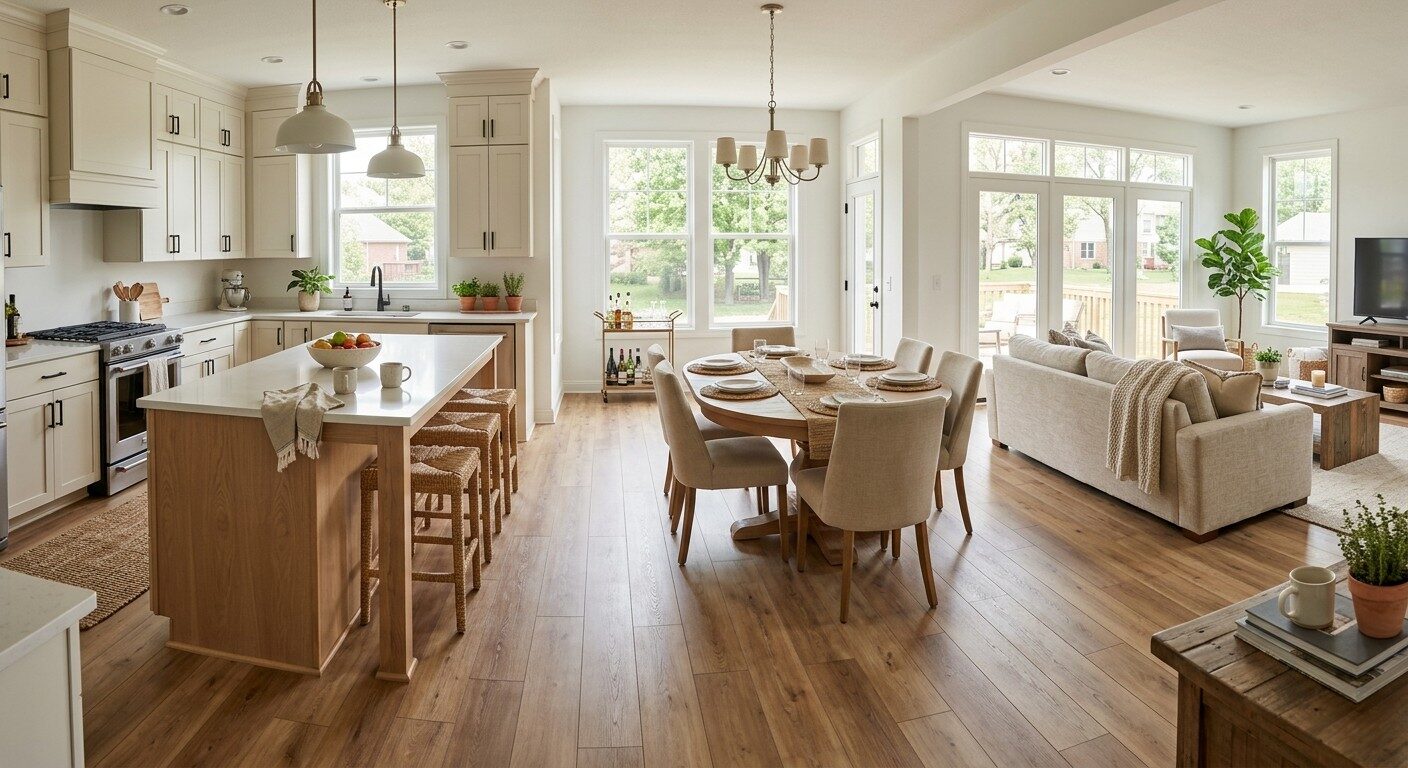
Most Indianapolis homeowners walk into our showroom with a tape measure and a budget. What they forget to bring is a plan for continuity. The single biggest flooring mistake we see in open concept homes across the northside, Castleton, and Geist corridors is this: choosing two or three different materials for connected spaces and then wondering why the whole main level feels choppy and visually loud.
Open concept living demands a different approach. Your kitchen, dining area, and living room now exist in one long sightline, and your floor is the one material that links all of it. Get it right and the entire home feels bigger, calmer, and more intentional. Get it wrong and no amount of furniture or paint will save it.
Installed cost for most Indianapolis open concept main levels runs between $6,000 and $18,000 depending on material. The right choice for your household also depends on factors specific to Indiana’s climate, soil, and how you actually live in the space. If you are planning a new build or a full renovation, schedule your free consultation with our team before you commit to a single square foot.
Jump to a Section
- Why Indianapolis Makes This Decision Harder Than It Looks
- The Honest Answer by Material
- What It Actually Costs in Indianapolis
- How to Zone Without Different Floors
- Living With Your Floor: Year One
- How to Vet a Flooring Installer
- Frequently Asked Questions
Why Indianapolis Homes Make This Decision Harder Than It Looks
Here in central Indiana, the soil does not stay still. Marion and Hamilton County sit on a mix of glacial till and poorly-drained Brookston and Crosby series soils. These soils hold moisture, expand and contract with seasonal saturation, and create subfloor movement that is genuinely different from what you would encounter in a drier climate like Denver or Phoenix.
What that means for your floor: moisture migration from below is a real and ongoing concern, especially in homes near Fall Creek or the newer builds going up along the 96th Street corridor where lot grading and drainage can vary significantly from lot to lot. When subfloor moisture levels fluctuate, solid hardwood cups. Wide plank boards gap at the joints during dry winters. Adhesive-down luxury vinyl can tent if moisture vapor pressure builds underneath.
Indiana’s seasons swing harder than most people expect when they first move here. Average summer humidity sits between 65 and 75 percent, while January interior air can drop below 30 percent in homes running forced-air heat without humidification. That is a swing of 40 or more percentage points across a single year, and every flooring material you consider will react to it differently. According to the NWFA’s guidelines on wood flooring and moisture, hardwood floors perform best when interior relative humidity is maintained between 35 and 55 percent year-round, something that requires active management in Indiana homes.
“Most homeowners pick their flooring before they think about what their subfloor is doing. In Fishers and Westfield especially, where a lot of these newer builds are slab-on-grade, that’s where we see the early failures. Moisture testing isn’t optional for us — it’s the first conversation.”
— Nate W., ICC Floors Plus
The Indianapolis metro also sees roughly 40 inches of precipitation annually, with heavy spring rain events that can challenge even well-graded lots. For open concept homes where the kitchen, entryway, and living room share one continuous floor, the material you select needs to handle the full range of use.
Pro-Tip Callout — ICC Floors Plus Team In newer subdivisions in Fishers and Westfield, slab-on-grade construction regularly shows elevated moisture vapor emissions before any flooring goes down. We always run a full moisture assessment, including RH in-situ probe testing per ASTM F2170 on concrete slabs, before installation in these neighborhoods. It is the step that most big box stores skip entirely, and it is the reason floors installed by those contractors tend to fail within two or three years.
What Is the Best Flooring for an Open Concept Home in Indianapolis? The Honest Answer by Material
No single material is universally correct, but there are clear leaders depending on your household, your subfloor, and what you want your home to feel like in ten years. Here is how the four most popular options actually perform in Indiana open concept homes.
Luxury Vinyl Plank: The Practical Powerhouse
Waterproof LVP for open floor plans has become the dominant choice for a reason. Rigid core LVP, particularly products from COREtec and Mannington, gives you dimensional stability that neither solid hardwood nor basic laminate can match. Its 100 percent waterproof construction makes it a genuinely worry-free choice for the kitchen-to-living room transition at the heart of every open concept layout.
Maintain interior relative humidity between 35 and 65 percent, as most manufacturers require. In a properly conditioned Indianapolis home, standard HVAC handles this without additional equipment, making LVP the lowest-maintenance option for Indiana’s climate.
Wide plank LVP in the 7 to 9 inch range does something specific for open concept spaces: it reduces the number of visible seams across a large floor, which makes the space read as more expansive. Think of it like reading a page with narrow columns versus full-width text. Fewer interruptions let the eye move farther and faster. A 900 square foot combined kitchen and living room installed with 9-inch wide planks will feel measurably larger than the same space done in 4-inch standard planks.
In 2026, Indianapolis buyers are moving away from the cool gray LVP palette that dominated the 2020 to 2023 market. Honey-toned, warm neutral LVP with a wire-brushed or natural texture finish is now the consistent request in our showroom. Matte finishes are outselling satin and gloss by a wide margin in high-light living areas, where gloss reveals every footprint and dog scratch.
For active families in Carmel, Zionsville, or anywhere in the Hamilton County new build market, choose a product with a 12 mil wear layer minimum. For households with large dogs or heavy foot traffic, step up to 20 mil and confirm the product carries an ASTM F1700 wear rating, since wear layer thickness and compound quality together determine scratch resistance. A thicker wear layer from a low-end manufacturer will not outperform a thinner layer from a quality brand.
One honest tradeoff: LVP transmits sound differently than hardwood. In a two-story open concept home, voices and footsteps echo more noticeably on LVP than on wood. The fix is acoustic underlayment rated at IIC 50 or higher for impact sound and STC 50 or higher for airborne sound such as voices and television. Both ratings matter in an open plan home and both should appear on any underlayment spec sheet you review before purchasing.
Not sure which wear layer or underlayment spec is right for your household? Book a free in-store sample session and our team will walk you through the options with samples in hand.
Engineered Hardwood: The Upgrade Choice
Wide plank engineered oak, particularly European white oak, is the premium choice for Indianapolis open concept homes where real wood aesthetics are non-negotiable. Unlike solid hardwood, engineered construction uses a cross-ply core that resists Indiana’s humidity-driven movement far better than solid boards.
Quality engineered products from Shaw or Anderson Tuftex, in a 7 or 8 inch width, give you the seamless hardwood installation look that photographs beautifully and adds genuine resale value. Appraisers in the Indianapolis market still differentiate between real wood and wood-look products, and that gap matters at the upper end of the market.
The honest limitation: engineered hardwood is not the right call for homes with slab-on-grade construction and documented moisture issues. It is also not the right call for households with large dogs, because no wood-based product holds up to repeated nail impact the way rigid core LVP does. You will refinish it, or you will live with the scratches.
Satin finish engineered wood is the 2026 aesthetic sweet spot. It reads warmer and more organic than gloss while hiding everyday wear better than a raw matte finish.
Large Format Tile: The Statement Option
Large format porcelain tile in 24×48 or 24×24 formats is the right call for a specific type of open concept home: one where the main level includes a large kitchen island, direct outdoor patio access, and heavy entertaining use. The micro-grout line look in stone visuals creates a continuous, almost unbroken surface that works exceptionally well in modern and transitional homes.
Nothing you can put on a floor is harder-wearing than porcelain. The limitation in Indianapolis is cold-to-the-touch underfoot feel during winter months and a significant echo issue in a large, hard-surface open plan. Radiant heat beneath tile solves the first problem. Area rugs solve the second.
Wide Plank Laminate: The High-Square-Footage Option
For open concept homes where budget is the primary constraint, AC5-rated wide plank laminate deserves serious consideration. AC5 is the highest commercial-grade abrasion rating available, meaning it handles heavy foot traffic across a large main level without showing wear prematurely. It is not appropriate for wet areas or spaces prone to standing water, so in a layout that includes a full kitchen zone, laminate works best paired with a quick-cleanup plan and mat placement at the sink.
Laminate is the loudest of the four materials underfoot, and in a hard-surface open plan it will amplify footsteps and voices noticeably. Acoustic underlayment is not optional with laminate in an open concept home.
For most Indianapolis homeowners, the decision comes down to this framework:
- LVP: Best for active households, young families, pet owners, or anyone with a slab subfloor or documented moisture concerns
- Engineered Hardwood: Best for mid-to-upper market homes where resale value and authentic wood aesthetics are the priority
- Large Format Tile: Best for formal, modern spaces with heavy entertaining use and a budget for radiant heat or planned area rug placement
- Wide Plank Laminate (AC5): Best for large square footage projects where budget matters and the kitchen zone can be carefully managed
“David in flooring spent hours helping us choose the right options and even found alternatives when our first selection was discontinued. He went above and beyond helping us find the perfect LVP.”
Holly D., Indianapolis — Luxury Vinyl Plank Installation (from our Google reviews)
How Much Does It Cost to Redo Floors in an Open Concept Home in Indianapolis?
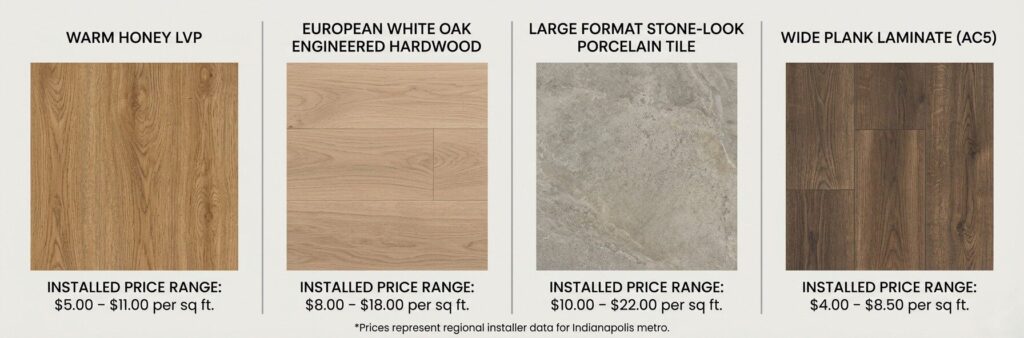
Most homeowners ask this question first and get the most misleading answers on it. Here is a realistic range based on current regional installer data for the Indianapolis metro:
| Flooring Type | Material (per sq ft) | Labor (per sq ft) | Total Installed | Local Notes |
|---|---|---|---|---|
| Rigid Core LVP | $3.00 – $7.00 | $2.00 – $4.00 | $5.00 – $11.00 | Add $0.50–$1.00/sq ft for acoustic underlayment; IIC 50 + STC 50 rated products recommended |
| Engineered Hardwood | $5.00 – $12.00 | $3.00 – $6.00 | $8.00 – $18.00 | Moisture barrier required for slab installs; adds to cost |
| Large Format Porcelain Tile | $4.00 – $10.00 | $6.00 – $12.00 | $10.00 – $22.00 | 24×48 formats require more skilled labor; prices reflect current Hamilton County rates |
| Wide Plank Laminate (AC5) | $2.00 – $5.00 | $2.00 – $3.50 | $4.00 – $8.50 | Best entry-level option for large square footage; not appropriate for wet kitchen zones |
Regional cost data sourced from HomeAdvisor Indianapolis metro and RSMeans 2025 regional data. Note: RSMeans is a licensed professional cost database without public access, but it is the industry-standard reference used by contractors and estimators across Indiana.
Subfloor prep is the most variable line item in any Indianapolis project. Older homes in Castleton, the SoBro area, or near Broad Ripple often have subfloor irregularities that require leveling before installation. That work is not included in the per-square-foot labor rates above and can add $500 to $2,000 to a project depending on severity.
Material availability also affects cost. Strong demand for wide plank LVP in warm neutral tones has created lead times on specific colorways from some manufacturers. Homeowners who lock in product early avoid price exposure from supply shifts.
Get your free in-home estimate and we will bring the samples to you, no commitment and no pressure.
How to Zone an Open Concept Space Without Using Different Floors
This is the design question we get most often from homeowners who have correctly decided on one continuous material but now worry their open plan will feel like one undifferentiated room.
The answer is layering, not flooring transitions. Here is how professional designers zone open concept spaces without resorting to tile-to-carpet or LVP-to-hardwood handoffs.
Area rugs are your primary zoning tool. A well-placed rug under the living room furniture creates a defined zone without interrupting the continuous floor beneath it. Sizing matters: a 9×12 rug properly anchors a seating group in a space up to roughly 18 feet wide. Go smaller and the furniture floats; go larger and the rug crowds the zone boundary.
For open plan dining, an 8×10 rug centered under the table with at least 24 inches of clearance on all sides keeps chairs on the rug when pulled out. The floor reads as unified while the rug signals the room function to the eye.
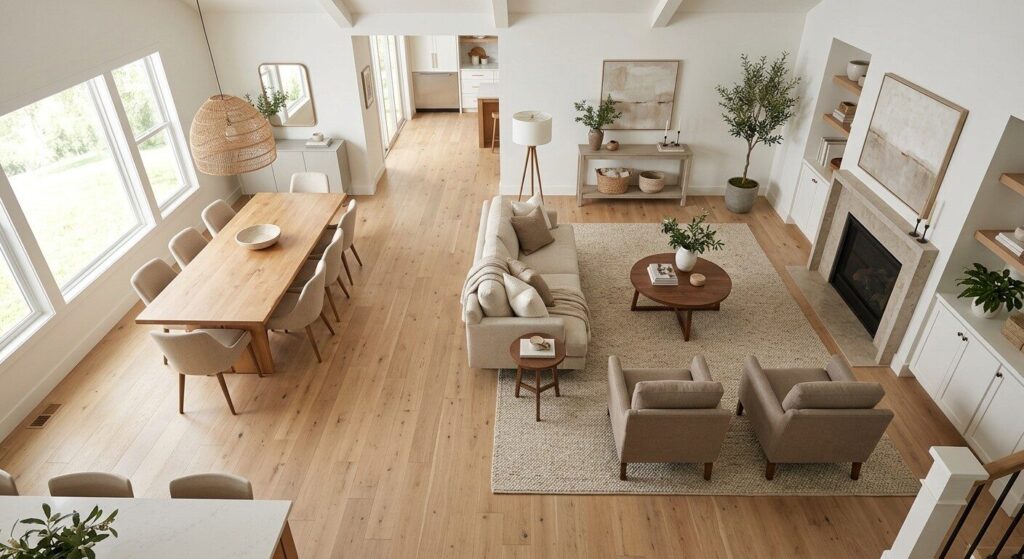
Directional flooring changes create subtle definition. Running planks in a different direction between kitchen and living zones creates a visual shift without introducing a new material. This technique requires a transition point between the two runs, allowing each section to float and expand independently. Without it, opposing plank runs can buckle against each other within a season.
Your installer can execute this with a flush or near-invisible break that most visitors will never notice. For a typical open plan, plank runs of 15 to 20 feet in a single direction before a transition are well within standard floating installation guidelines. Herringbone flooring in an entryway or dining zone is the more elevated version of this technique, handled the same way at the seam.
Furniture placement does more work than most people realize. A sofa floating in the middle of an open plan, rather than pushed against the wall, creates a room within a room without any flooring change at all. A console table behind the sofa reinforces the zone boundary and gives the space a finished look from the kitchen side.
Inlay transitions and bordered wood floors are the premium approach for homes where budget allows. A simple 3-inch bordered inlay in a contrasting stain or tile defines a dining zone in a way that feels custom and intentional, not contractor-grade.
Flush transitions matter at every doorway and threshold. Where different materials do meet, flush T-molding in matched metal or wood keeps the handoff nearly invisible. Avoid raised threshold pieces; they read as an afterthought and catch every vacuuming pass.
“The question I hear most is how to make an open plan feel like it has separate rooms without walls. My answer is always the same: one floor, good rugs, and furniture that floats. You don’t need transitions — you need layers.”
— Nate W., ICC Floors Plus
If you want to understand how wide plank selection specifically affects spatial perception in open layouts, our post on designing with wide plank flooring covers the visual mechanics in detail. For guidance on carrying your chosen material into adjacent spaces, see our post on entryway flooring that makes a first impression.
Living With Your Open Concept Floor: What the First Year Looks Like
Choosing the right material is only half the equation. How you maintain it through Indiana’s seasonal swings determines whether it looks great at year ten or starts showing problems at year three.
For LVP: The most common maintenance mistake is running a steam mop on rigid core LVP. Steam drives moisture into the seams and can cause edge curling, particularly in humid summer months. Use a damp microfiber mop with a pH-neutral cleaner and keep interior humidity between 35 and 50 percent through dry Indiana winters.
For engineered hardwood: Indianapolis summers will push your interior humidity above the 55 percent threshold the NWFA recommends without active dehumidification. Run a whole-home dehumidifier any time interior relative humidity exceeds 55 percent, which typically means late spring through early fall in Indianapolis. Warm October years will extend that window. In winter, keep interior humidity above 35 percent to prevent gapping.
For large format tile: Grout maintenance is the long-term variable. In a high-traffic open concept kitchen and living area, seal micro-grout lines every six months for the first two years, then annually after the grout has fully cured and stabilized. Skipping this step in year one allows staining that no amount of scrubbing will fully reverse.
Door mats at every entry point are the single highest-return maintenance investment for any floor type. Indiana’s spring and fall seasons bring tracked-in moisture and debris that create micro-scratches on any surface over time. Grit is the enemy of finish longevity on every material.
“The team at ICC Floors was terrific to work with. They answered all my questions, made the process easy, and even brought flooring samples to my home. The installation was quick and professional.”
Tiffany H., Indianapolis — Hardwood Installation (from our Google reviews)
How to Vet a Flooring Installer in Indianapolis Before You Sign Anything
The gap between a good flooring consultation and a good installation is the most common frustration we hear from homeowners who have been through the process before. Here is what to ask any contractor, including us, before work begins.
Ask specifically about subfloor assessment. Any contractor who quotes a large open concept project without visiting the space in person is guessing. A proper estimate requires walking the floor, checking for squeaks, bounce, and level, and identifying any prep work needed before material goes down.
Ask for a moisture test reading and the method used. There is a meaningful difference between a basic pin-type meter reading and a calibrated RH in-situ probe test per ASTM F2170, which is the industry standard for concrete slab assessment and what most flooring manufacturers require for warranty coverage. If a contractor does not mention the test method, ask directly.
Read the warranty language carefully. Vague manufacturer warranty coverage that excludes installation-related failures is common in big box store contracts. Ask specifically whether installation labor is covered if the floor fails due to a subfloor prep issue. If the answer is no or unclear, get it in writing before you proceed. A warranty that does not cover the most likely failure mode is not much of a warranty.
At ICC Floors Plus, our in-home measurement service is free and includes a subfloor assessment. We bring calibrated moisture testing equipment, including RH in-situ probes for concrete slabs per ASTM F2170, and a floor level gauge on every measure visit. That information shapes the quote and the installation plan, and you receive it before you commit to anything.
We have been doing this in Indianapolis since 1998. The homes we install in Geist, Fishers, Carmel, and the northside are not abstract projects; they are neighborhoods we drive through every day. That accountability changes how we work.
Read what Indianapolis homeowners say about working with our team before booking your consultation.
Frequently Asked Questions
How much does it cost to redo floors in an open concept home in Indianapolis?
For a typical 1,000 to 1,500 square foot combined kitchen, dining, and living area in Indianapolis, expect total installed costs between $6,000 and $18,000 depending on material selection. Rigid core LVP at the quality end lands between $7,000 and $12,000 for that square footage. Engineered hardwood in the same space typically runs $10,000 to $18,000 installed. Large format tile is the most labor-intensive option and typically starts around $12,000 for an open concept main level. Subfloor prep, if needed, is a separate line item.
How does Indianapolis humidity affect which floor I should choose for my open concept home?
Indianapolis summers push interior relative humidity into the 65 to 75 percent range without active dehumidification. Solid hardwood cannot handle that range in an open plan home without cupping risk. Engineered hardwood manages it significantly better, but still requires a whole-home dehumidifier running any time interior RH exceeds 55 percent, typically late spring through early fall in Indianapolis. Rigid core LVP performs best when interior RH is maintained between 35 and 65 percent, which standard HVAC handles in a conditioned Indianapolis home without additional equipment.
What does the installation process look like from first call to finished floor?
At ICC Floors Plus, the process has four steps. First, you book a free in-store or in-home consultation where a designer walks through your space and discusses options. Second, we measure your space at no charge, run a moisture assessment, and deliver an accurate estimate. Third, you select an installation date and our professional team handles the work. Fourth, you enjoy the result. From initial consultation to installation day, most projects move in two to four weeks depending on material availability and schedule.
How do I know when my open concept floor needs to be replaced versus just refinished or repaired?
For hardwood and engineered hardwood, the indicators that point toward replacement rather than repair are visible cupping, gapping accompanied by subfloor exposure or structural creaking, or surface finish wear that refinishing cannot reach. Seasonal gaps of 1/16 inch or slightly more during dry Indiana winters are normal and not a replacement indicator on their own. For LVP, significant edge lifting, tenting (where planks lift at the center and edges due to moisture pressure), or wear-through to the print layer on high-traffic paths signals replacement. An in-person assessment is always the right first step before committing to a full replacement.
Is it actually better to use one flooring material throughout an open concept home, or is that a trend that will date the space?
Continuous single-material flooring in an open concept home is not a trend; it is a principle of spatial design. High-contrast flooring transitions in open plans visually fragment the space and make rooms feel smaller. The 2026 market has moved decisively toward seamless, unified floor plans because homeowners and appraisers have both recognized the value of visual continuity. The specific material you choose will evolve with trends. The principle of using one continuous floor for connected spaces will not.
Ready to Get It Right the First Time?
Your research is done. The next step is a conversation with someone who has seen every subfloor condition, every open plan configuration, and every common mistake that Indianapolis homeowners make, and knows exactly how to avoid all of them.
317-813-0931. Call or text us to book your free consultation.
ICC Floors Plus has been serving Indianapolis homeowners since 1998, with six locations across the metro including our main showroom at 7226 East 87th Street, Indianapolis, IN 46256. Book your free consultation and we will come to you, bring samples, take measurements, and give you a real number built around your home.
No appointment needed to browse the showroom. Free in-home consultations are available six days a week.
You Might Also Like
-
- Flooring
- Cabinets
October 8, 2026
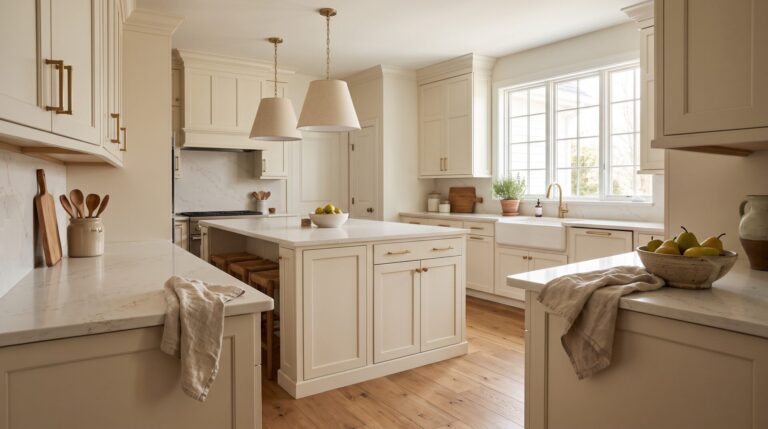
How to Choose Kitchen Cabinets That Match Your Flooring: A Design Guide for Indianapolis Homes
-
- Flooring
- Rugs
September 15, 2026
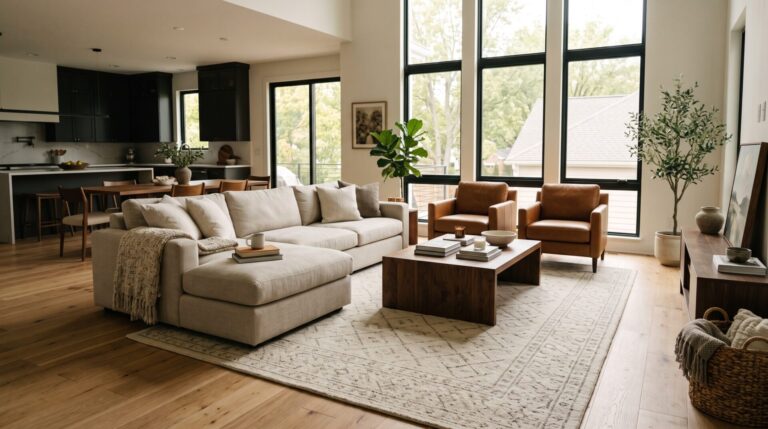
Area Rugs and Stair Runners for Indianapolis Homes: A Design Guide for 2026
-
- Flooring
August 17, 2026
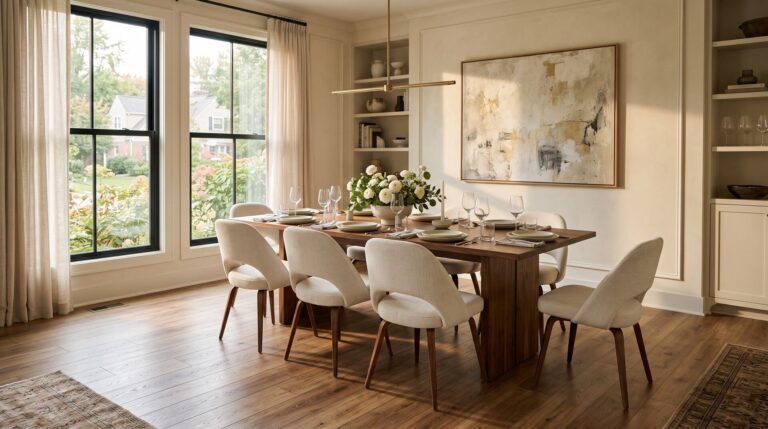
Laminate Flooring in Indianapolis: Is It Right for Your Indiana Home in 2026?