

- Flooring
The Floors That Define a Room – A Spring Renovation Guide
May 12, 2026

Published May 12, 2026 | ICC Floors Plus, Indianapolis, IN
Most homeowners start shopping for new floors in spring because the timing feels right: the house is being deep-cleaned, windows are open, and the motivation is high.
This guide is written for homeowners in the Indianapolis metro, from Fishers and Carmel to Broad Ripple and Zionsville, who want to upgrade their floors this season without regret.
If you’re ready to get started, schedule a free consultation with the ICC Floors Plus team and let us measure your space at no charge.How Is Flooring Affected By The Indianapolis Climate?
Indiana’s seasons are not gentle on flooring.
Indianapolis sits in a humid continental climate where temperatures can swing 40 degrees in a week. Indoor relative humidity climbs from around 65% in early April to over 72% by late spring, and that shift matters enormously for the materials under your feet.
Wood expands as it absorbs moisture.
Engineered hardwood handles this better than solid wood because its cross-ply construction resists movement. Solid hardwood installed in a dry March home without proper acclimation can cup noticeably once May arrives.
Laminate, which is essentially a photograph over a wood-composite core, is especially vulnerable because its edges swell and the joints telegraph stress.
Indianapolis homes also sit on Marion County’s mix of silty clay and loam soils, which retain groundwater well into spring. That moisture migrates upward. Homes near White River or in older neighborhoods like Irvington and Fountain Square see notably higher subfloor moisture readings during wet springs.
Every install at ICC Floors Plus starts with a moisture assessment for exactly this reason.
| Pro Tip from the ICC Floors Plus TeamIn areas like Meridian-Kessler and Broad Ripple, we frequently see subfloor readings that are 15–20% above average after a wet March or April. We never skip the moisture barrier assessment in these neighborhoods. A $200 moisture test can prevent a $4,000 floor failure. |
Which Flooring Actually Works for This Climate?
The good news: there are excellent options for every room and every budget. The key is matching material to the specific conditions in your home, not just what looks good on a showroom floor.
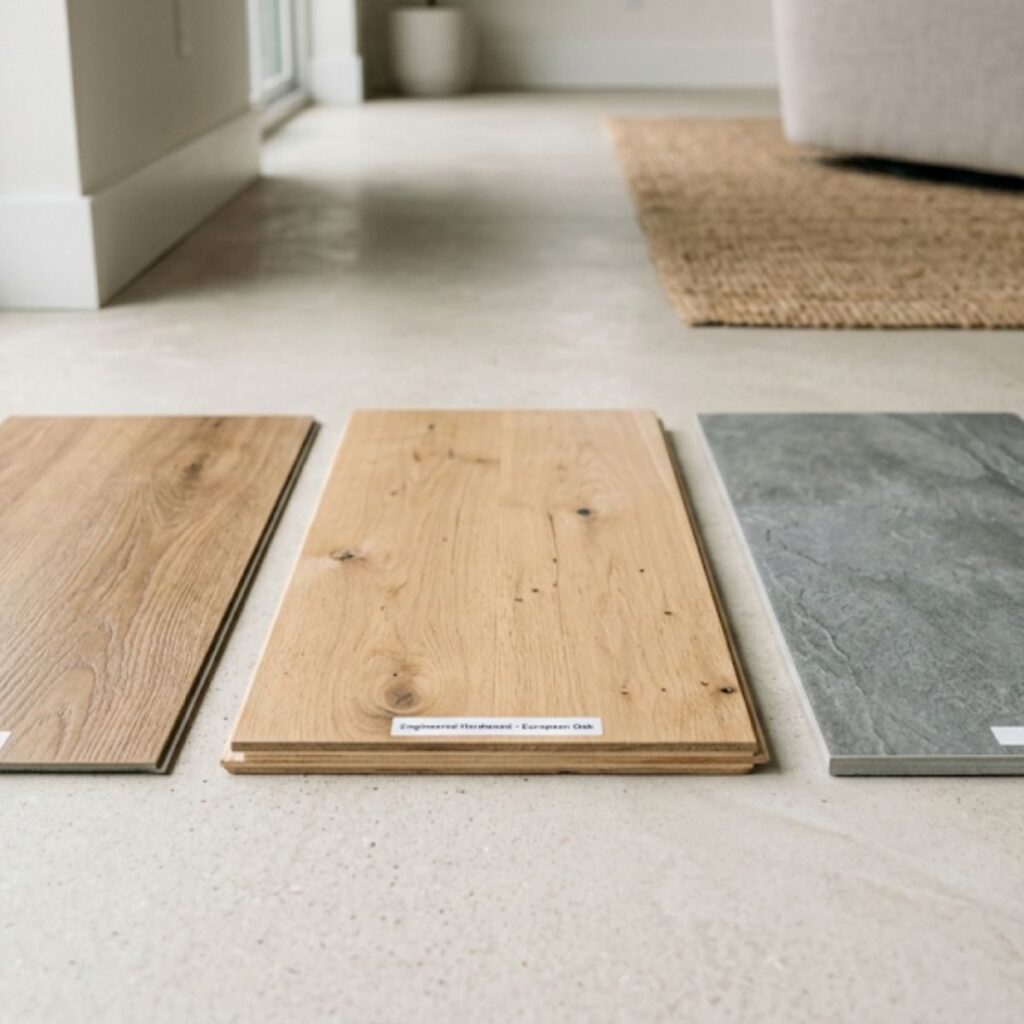
Luxury Vinyl Plank (LVP): The Climate-Proof Choice
LVP is the most popular floor we sell in spring, and for good reason.
Brands like COREtec, Shaw, and Mannington produce rigid-core LVP that expands and contracts minimally through Indiana’s humidity swings. It’s 100% waterproof, which matters in kitchens, mudrooms, and basements. And it installs fast, with no acclimation window required.
It won’t add real estate value the way hardwood does, and it can feel less substantial underfoot. But for a busy household with kids and pets in a climate that challenges every material, it’s the honest recommendation.
Engineered Hardwood: The Beauty Option That Still Works Here
If the look and feel of real wood matters to you, engineered hardwood is the right call over solid hardwood in Indianapolis.
The multi-ply construction makes it dimensionally more stable when humidity rises. Brands like Anderson Tuftex and IndusParquet carry wide-plank options that photograph beautifully and hold up well when properly acclimated.
Plan for a five-day acclimation period minimum. And never install engineered hardwood in a basement or any below-grade space, where moisture migration from the soil is a year-round reality.
Tile: The Right Answer for Wet Zones
For bathrooms, laundry rooms, and mudroom entries, porcelain or ceramic tile remains the most durable surface available.
It’s completely impervious to moisture, easy to clean, and pairs naturally with radiant heat if you’re doing a full bathroom renovation. ICC Floors Plus also carries Schluter Systems products for proper tile edge transitions and waterproofing, which are the details that separate a lasting tile job from one that fails.
“David in flooring spent hours helping us choose the right options and even found alternatives when our first selection was discontinued. He went above and beyond helping us find the perfect LVP.”
Holly D., Indianapolis — Luxury Vinyl & Countertops
How to Keep Your New Floors Looking Great Through Indiana Seasons
The National Wood Flooring Association recommends maintaining indoor relative humidity between 35% and 55% year-round for hardwood and engineered wood.
Indianapolis summers regularly push above that range. A portable dehumidifier in high-traffic areas or a whole-house unit tied to your HVAC is worth the investment if you’re installing wood or engineered hardwood.
In spring specifically, watch for the transition window between heating season and air conditioning. When HVAC systems cycle between modes, indoor humidity can spike rapidly. Homeowners who host gatherings or have large families moving in and out frequently amplify this effect. LVP is largely forgiving. Wood is not.
One maintenance mistake that shortens floor life here: using steam mops on hardwood or engineered wood. The steam drives moisture directly into the wood fibers and compromises adhesion over time. Dry microfiber mopping and a manufacturer-approved cleaner is the right approach.“The team at ICC Floors was terrific to work with. They answered all my questions, made the process easy, and even brought flooring samples to my home. The installation was quick and professional, and now I have beautiful new hardwood floors!”
Tiffany H. — Hardwood Flooring Installation
How to Choose a Flooring Installer in Indianapolis
Before signing any contract for a spring flooring project, ask these questions of every installer you talk to:
- Do you take moisture readings before installing? If not, walk away. This is the single most skipped step in the industry, and it’s responsible for the majority of warranty disputes.
- Will someone physically visit the site before quoting? A legitimate installer measures your actual space and notes subfloor conditions. Any quote given over the phone without a site visit is a guess.
- What does your warranty cover, and who handles it? Vague warranty language is a red flag. Get the coverage in writing and confirm whether it covers both materials and labor.
ICC Floors Plus has served Indianapolis homeowners since 1998 with a free in-home measurement service and a named team of designers, project managers, and installers. The company is a NARI Central Indiana member and Indianapolis’s only Benjamin Moore Signature Store, which speaks to the range of renovation expertise under one roof. Before your visit, you can also try the Room Visualizer tool at iccfloors.com to preview different floors in a photo of your actual room.
FAQ: Spring Flooring in Indianapolis
How much does it cost to install new floors in Indianapolis?
Most residential flooring projects in the Indianapolis area run between $4 and $17 per square foot installed, depending on material and subfloor condition. LVP is the most affordable option at $4 to $10 installed. Engineered hardwood runs $7 to $15 installed. Tile projects often hit the higher end of that range when waterproofing and proper setting materials are included. Always get an in-home quote, because subfloor preparation adds cost that online calculators cannot account for.
Does Indianapolis’ humidity hurt hardwood floors?
Yes, and it’s the most common reason hardwood floors cup or gap in Indiana homes. Indianapolis’ relative humidity rises from around 65% in spring to over 72% in peak summer. The National Wood Flooring Association recommends keeping indoor humidity between 35% and 55% for hardwood. Without climate control, solid hardwood absorbs that excess moisture and expands. Engineered hardwood handles the swings better because of its layered construction, and LVP is essentially immune.
Is spring a good time to install hardwood floors?
Spring can work well if you account for Indiana’s humidity trajectory. The ideal window is early to mid-spring, before humidity climbs. Plan a five-day minimum acclimation period with the flooring stored in your home’s conditioned space. Avoid installing right after heavy rain events that raise outdoor humidity sharply. And make sure your installer tests subfloor moisture first, especially in older homes where spring groundwater can migrate up through the slab.Ready to Upgrade Your Indianapolis Home This Spring?
Ready to Upgrade Your Indianapolis Home This Spring?
The right floor for your home depends on your rooms, your lifestyle, and the specific conditions under your subfloor.
ICC Floors Plus has been helping Indianapolis homeowners get that right since 1998, with no-pressure consultations, free in-home measurements, and a team that knows Indiana’s soil, humidity, and housing stock from the inside out.
Stop by any of our six Central Indiana locations, or book your free consultation online. Our flagship store is at 7226 E 87th St, Indianapolis, IN 46256, reachable at (317) 813-0931. Before you come in, take two minutes to try the Room Visualizer and see how your shortlist of floors looks in a photo of your actual space.
Spring fills up fast. Book now and we’ll have your floors installed before summer entertaining season arrives.
You Might Also Like
-

- Flooring
- Cabinets
October 8, 2026
How to Choose Kitchen Cabinets That Match Your Flooring: A Design Guide for Indianapolis Homes
-

- Flooring
- Rugs
September 15, 2026
Area Rugs and Stair Runners for Indianapolis Homes: A Design Guide for 2026
-

- Flooring
August 17, 2026
Laminate Flooring in Indianapolis: Is It Right for Your Indiana Home in 2026?